Part of the ‘Hope to action’ series
In my previous “It is enough” post, I discussed my own anxiety about the prospect of extinction, and ultimately tried to highlight a glimmer of hope for the future. This is not some kind of unfounded eco-fear-mongering, the situation is in fact dire. Skeptical? Spend some time looking at the IUCN Red List for extinct, extinct in the wild, critically endangered, endangered, and vulnerable species (currently showing 43,094 results). The scope of the problem becomes overwhelming and has the risk of leading to a nihilistic outlook. But as Sir David Attenborough says in the interview I previously referenced:
I mean, what good is it to say ‘oh, to hell with it, I don’t care?’ You can’t say that. Not if you love your children. Not if you love the rest of humanity. How can you say that?
Sir David Attenborough, 60 Minutes
I also wanted to highlight the hope of future generations, and the importance of impressing upon them the beauty and value of the natural world, and as Aldo Leopold and Bob Jennings could more artfully express than myself, that if we take that part of the world for granted (or worse) it will be gone forever. And we will be so much poorer for it.
When Jennings writes the following:
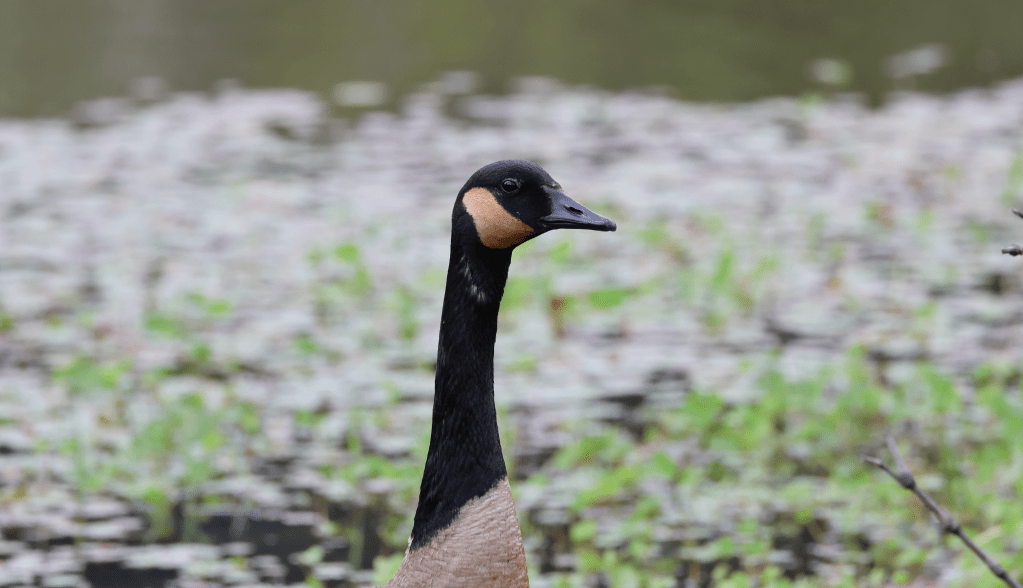
The geese pass swiftly, but the song does not. I sit in the growing dusk and remember the gift sent down. I cannot fly and I cannot match their song, but I can, for a moment, find their freedom within myself. It is enough.
Bob Jennings, Goose Music
I see this as a reaffirmation of his mission, that children will “see that they share this planet, and that sharing is a two-way street.” The freedom Bob found within himself is the connection with the natural world, and the gift of the song is a clarion call to action, to ensure that the “young ones” can find that same freedom.
However, “it is enough” does not mean we can pass the buck to the future. The current dilemma we are in requires action, but when the scope of the problem is so unwieldy what can we as individuals do? The old environmental mantra of “think globally, act locally” is a good place to start.

Doug Tallamy is an entomologist, a professor in the Department of Entomology and Wildlife Ecology at the University of Delaware, and an author. Tallamy’s book Nature’s Best Hope and the related Homegrown National Park nonprofit, in my opinion, point to some of the best ways we can take action as individuals. In a nutshell as stewards of our land (in most cases, our yards) the basic recommendations are…
- Reduce the area in lawn
- Plant more natives
- Remove invasives
There is nuance in all of these and there are many resources, including Tallamy’s book, that explain in great detail the importance of all three. The reality is that it is challenging to change the direction of aesthetics and human behavior, and I’m no exception. When my family moved to our current home we were lucky enough to “inherit” a lawn-less yard, but we still have work to do with transitioning invasives to natives. It doesn’t need to be an overnight change, as long as the decisions and changes we make are in the right direction.
I strongly suggest you watch the following video where Tallamy explains the idea behind Homegrown National Park and the urgency to “convert hope to action”:
I’ll be sharing some simple recommendations in a series of “Hope to action” posts very soon!
 Birds of Kirkwood